
Every year, March is celebrated as Women’s History Month. It’s a time to remember and recognize women’s contributions to our culture, society, and the greater world that surrounds us. Canada is filled with incredible women who have paved the way for the next generation: inspiring, supporting, and uplifting people across the country in all fields and areas of expertise. Professors, mentors, family members, teachers, coaches, and activists are just a few examples of the influential roles women take on nowadays. Let’s look back through history at the women who have made this possible.
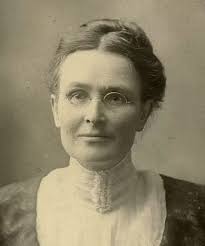
Emma Baker was born in 1856 in Milton, Ontario. She took on the path of seeking higher education, unusual at the time, completing high school before teaching and serving as principal at a series of high schools in Ontario and Pennsylvania. She travelled to Europe in the 1890s, where she became well acquainted with the culture and learned to speak fluent French. Emma was in her early forties when she returned to Canada and joined the Victoria College class of 1899. She earned her bachelor of arts in philosophy, as well as acting as president of her class and vice-president of the Philosophy Society. She next attended the University of Toronto to get her Ph.D, where she studied psychology, focusing on colour aesthetic and perception. She became one of the first two women to earn a Ph.D from a Canadian University in 1903 alongside chemist Clara Benson. It was only the eighth Ph.D awarded by the university at the time. In 1914, she accepted a professorship in psychology, ethics and economics at the Maryland College for Women in Lutherville, Maryland, where she lived until her well-earned retirement at 75. She then returned to her home in Toronto, where she lived until the age of 88. Emma Baker paved the way for women in academia in Canada, and someone we can all look up to as we freak out about entering university in the next few years.
Lucy Maud Montgomery is probably the most famous name on the list, as the creator of the beloved Canadian character Anne Shirley, or Anne of Green Gables. Lucy was born in Clifton, now called New London, on Prince Edward Island on 1874 November 30. At just 21 months old, her mother died of tuberculosis, leaving her to the care of her father, who promptly left her in the care of her maternal grandparents instead. Lucy always had a passion for writing—at the age of 9, she began writing poetry and keeping a journal. She spent time in 1890–1891 with her father and his wife in Prince Albert, where she published her first item, a poem called “On Cape LeForce”, in a P.E.I. newspaper called the Patriot. Much like the character Anne Shirley, she studied for a teaching license in 1893–1894, completing the two-year course in one year and graduating with honours. She taught at three different schools before the death of her grandfather in 1898, when she returned to Cavendish to take care of her grandmother, who otherwise would have had to leave her home. She remained mostly with her grandmother for the next thirteen years, during which she wrote Anne of Green Gables in 1905. She sent the manuscript to several publishers, but put it away after receiving rejections from all of them. After re-reading the manuscript two years later, she decided to try again, and this time it was accepted by the Page Company of Boston, Massachusetts and published in 1908. She continued to write stories after moving to Ontario with her husband after the death of her grandmother in 1911, where she raised her sons and kept up a great correspondence with friends, family and fans. She returned to P.E.I. in death after she passed away in 1942, and was buried in the Cavendish cemetery near her old home.
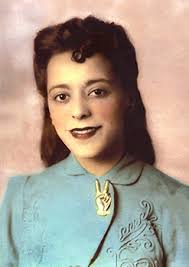
Viola Desmond is another well-known name here who is nonetheless deserving of recognition. Another East Coast girl like L.M. Montgomery, Viola was born on 1914 July 06 in Halifax, where she grew up with ten siblings and parents highly regarded within the Black community of Halifax. Viola was the well-known owner of the Desmond School of Beauty Culture in Halifax, where she also had her own line of products. Beauty parlours became a centre of social contact within the Black community, allowing Viola to gain a position of status and authority. She acted as a mentor to young Black women through her beauty school, and was thought of as a kind and competent person. On 1946 November 08, Viola went to a movie theatre in New Glasgow, Nova Scotia, while mechanics worked on her car nearby. She approached the ticket booth and asked for one ticket to the 7:00PM showing of the Dark Mirror. She asked for a ticket one down, on the ground floor, but was instead handed an upstairs ticket by the cashier, enforcing an unwritten segregation rule. Ignoring this, she took her seat on the main floor, and refused to move when prompted to. For this, she was roughly dragged to the theatre lobby, put in a taxi and taken to jail for the night. The next day she was charged with violating a provincial act for failing to pay the full amusement tax on her admission, a one-cent mix up that was due entirely to the fact that the cashier refused to sell her a downstairs ticket. Her offer to pay the difference was denied, and she was fined 26 dollars. Despite this injustice, she continued to act as a mentor and active voice within the Black community until her death in 1965. In 2010, Governor Mayann Francis issued Desmond a free pardon, a small justice that came far too late. Viola Desmond was chosen to be featured on the ten-dollar banknote in 2016, the first Canadian woman to be featured by herself on the face of a banknote. Viola never set out to become an activist—she simply wanted to see a movie one evening. However, she has become an icon of the Black Canadian community, and an example to all of us not to accept the status quo.
Next, we’ll travel up to the Arctic to meet Inuit artist Kenojuak Ashevak. Kenojuak was born in the outpost camp of Ikarasaq on the Southern coast of Baffin Island in 1927, where she learned traditional art and skills from her grandmother, Koweesa. She got into drawing and carving in her 20s, especially while undergoing medical treatment in southern Canada, where she would draw to pass time. She rose to prominence through her graphic works, in which she portrayed animals, humans and spirits of her surrounding environment, with a particular focus on birds. One of her earliest and most well-known works was made in 1960 and is titled the Enchanted Owl. In 1970, Kenojuak became the first Inuk to have her artwork displayed on a stamp, when Canada Post decided to feature the aforementioned piece on one of their stamps. Her works were displayed in exhibitions across Canada, Europe, and Asia, and are still coveted items of many collectors. She was awarded the Order of Canada in 1967, became a Companion of the Order of Canada in 1982, and was awarded the Governor General’s Award in Visual Arts in 2008, as well as receiving honorary degrees from the University of Toronto and Queen’s University. Because of her busy schedule and travelling, she became a cultural ambassador and a role model for Indigenous artists and women, known as charming, gracious, intelligent and funny. She passed away in 2013. Late in her life, people often asked her when she would stop drawing. Kenojuak answered, “this is my job and my love. I cannot imagine life without art”.
Ending with another University of Toronto alumna, we’ll be looking at one of women’s hockey’s first big stars, Vicky Sunohara. Her Japanese grandparents moved to Ontario after being forced into internment camps in B.C. during the second world war, where they had her father and his siblings. She credits her dad for igniting her passion for hockey, introducing her to the sport before she was two years old. It was that passion that held the family together after his passing when Vicky was only seven years old. After that, it was her Ukrainian mother who would accompany her to hockey practices, where she experienced racist name-calling, and people asking if she was adopted. Vicky remembers wishing she looked like her mother so she didn’t have to deal with this. Her mother encouraged her and reminded her the best revenge she could get was scoring the most goals. Once she graduated high school, Vicky played for both the Northeastern University and the University of Toronto for two seasons each. She spent time in the Central Ontario Women’s Hockey League and played parts of eleven seasons with Brampton Thunder in the National Women’s Hockey League and the Canadian Women’s Hockey League. She competed in the first-ever women’s hockey championship in 1990 and the first Olympic women’s tournament in 1998. In her hockey career, she is remembered as a legendary forward, three time Olympian with two gold medals, and a seven-time world champion. She stepped back from playing in 2009 after discovering she was pregnant with twin boys. Vicky never dreamed of being a coach, but when the position opened up at University of Toronto in 2011, she knew it was meant to be. She’s been coaching the Varsity Blues since then, as well as her sons’ team. She is a part of a B.I.P.O.C. coach mentoring group established by the Black Canadian Coaches Associated, and says her job is not only developing hockey skills but “also trying to help provide a supportive environment and be a leader within a good culture”. I personally have no doubt she’ll continue to do just that and contribute to the hockey community as an icon and mentor for years to come.
Women have gone underappreciated for hundreds of years, in Canada and all across the globe. These are just a few of the incredible women who can act as beacons of wisdom and success for us today. I’ll end with a shout out to all the women out there today pursuing something—whether that’s writing, education, sports, or even just getting out of bed today—happy Women’s History Month!